Introduction (Institutional)
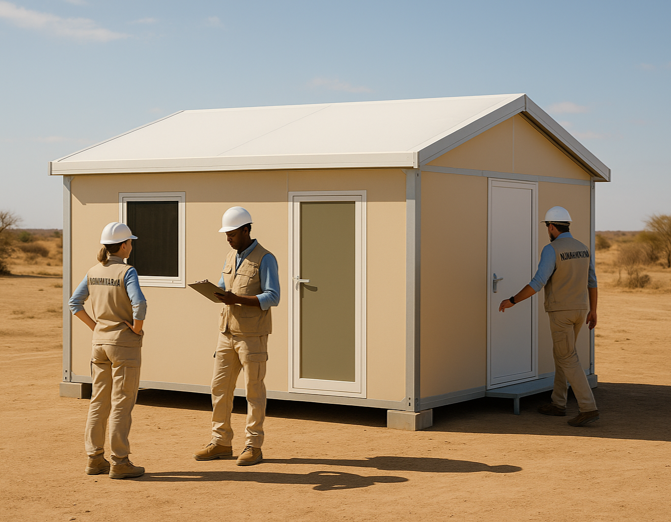
LCEM Group has developed a structured and scalable deployment model, designed to support humanitarian, institutional, and large-scale collective construction projects.
The 10+3 model is a deployment approach that combines operational efficiency, cost optimization, and social impact, enabling projects to scale while maintaining technical reliability and long-term sustainability.
This model is particularly adapted to humanitarian programs, public infrastructure initiatives, and international development projects.
What Is the 10+3 Model?
The 10+3 model is based on a project-lot deployment strategy:
- 10 modular units dedicated to the core operational needs of a project
- +3 additional units integrated to support social, community, or humanitarian functions
This structure allows projects to be deployed efficiently while embedding social value and resilience into each program.
Operational Objectives of the 10 Units
The 10 primary units are designed to address essential infrastructure needs, such as:
- Emergency and transitional housing
- Medical and healthcare facilities
- Educational and training buildings
- Administrative and coordination offices
- Logistics, storage, and technical facilities
These units form the operational backbone of the project, ensuring rapid deployment, scalability, and functional efficiency.
The Role of the +3 Social Impact Units
The +3 units are integrated to reinforce the humanitarian and social dimension of the project.
Depending on the context, they may include:
- Community spaces or social support facilities
- Educational or vocational training units
- Local coordination, maintenance, or capacity-building facilities
These additional units are designed to strengthen local resilience, support communities over time, and improve the long-term impact of humanitarian or institutional programs.
A Scalable & Replicable Deployment Strategy
The 10+3 model is modular by design and can be adapted to different scales:
- Initial deployment: 13 units
- Medium-scale programs: 26, 39, or more units
- Large-scale operations: 50, 100+ modular units
This flexibility allows NGOs and institutions to start with a controlled deployment and expand progressively as needs evolve.
Technical & Industrial Foundations
All units deployed under the 10+3 model are based on:
- Industrial modular manufacturing
- Standardized design and prefabrication
- Compliance with international construction standards
- Adaptability to climate, regulatory, and logistical constraints
This ensures consistent quality, predictable timelines, and optimized cost control for large-scale deployments.
Adapted to Humanitarian & Institutional Contexts
The 10+3 model is designed to operate in:
- Emergency response and crisis situations
- Refugee and displacement programs
- Post-disaster reconstruction
- Public infrastructure and institutional development projects
Its structured approach allows organizations to combine rapid response capacity with long-term operational planning.
A Responsible & Impact-Oriented Approach
Beyond construction, the 10+3 model reflects LCEM Group’s commitment to:
- Sustainable deployment strategies
- Reduced environmental impact through modular construction
- Long-term durability and low maintenance requirements
- Social impact integrated at the project design level
This approach supports both immediate humanitarian needs and long-term development objectives.
Conclusion / Call To Action
The 10+3 deployment model offers NGOs, public authorities, and international partners a reliable, scalable, and responsible framework for modular construction projects.
LCEM Group is open to discussions regarding:
- Feasibility studies
- Technical assessments
- Pilot deployments
- Large-scale humanitarian and institutional programs
Contact us to explore how the 10+3 model can support your future projects worldwide.